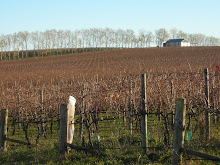
I'm not sure that giving away wine such as Antinori, Biondi Santi, Donnafugata and Pio Cesare is necessarily the right move for the Italian government with Prime Minister Berlusconi under siege in the international press; it might come off as an underhanded attempt to gain favour.
As part of its "Made in Italy" brand, celebrating the best in Italian brands, manufacturing and products, the Italian government will give visiting dignitaries a case of Italy's best wine. What wine will be included in the cherry wood case is anyone's guess, but it is said to be "among the most prestigious labels of the country" and presided over by no-one less than Piero Antinori.
The initiative comes from the Minster of Foreign Affairs with a statement saying that wine is one of the best representatives of Italy and the opportunity to promote the Italian culture and language has not been fully explored. The project is in collaboration with the 'Istituto del vino italiano di qualità Grandi Marchi' (the Institute of Fine Italian Wine: Premium Brands, site in English), which manages 17 of Italy's best wine brands.
According to the Minister for Foreign Affairs, it is to Berlusconi we "owe the new direction of Italian diplomacy at the service of the development of the country". I fail to see the link between making prestigious wine a gift to travelling diplomats and the overall promotion of Italian language and culture.
While I've got no problem with the Institute of Premium Brands, I have some concern about it lending its services to the current Italian government, under the circumstances. The Insitute's mission statement (below) would suggest they could re-think the strategy of giving their wine, not as a contribution to Italian culture, but to a government initiative, lest it be seen as an endorsement of the government or worse, an attempt to buy the favour of international visitors.
The Institute of Fine Italian Wines - Premium Brands is the result of the determination and enthusiasm of some of the most important Italian wineries to promote the culture and commercialisation of Italian high quality wine on world markets.
It unites families and brands which characterise the Italian wine-making tradition - each one extremely innovative yet highly representative of the production of their region.
Each winery is defined by the high standards of its products and brand image at national and international levels.
They are families and brands which encapsulate the identity of Italian wine which is synonymous with quality and style throughout the world.
The member wineries strongly adhere to tradition whilst constantly updating their style and production methods to meet the needs of evolving markets. Both of these aspects are important characteristics of Italian winemaking and are the key to the success of Italian wine on International markets.
The Institute aims to:
* give direction and incisiveness to the development of quality Italian wine and to the brands which express this on world markets
* organise and develop training and educational activities contributing to the promotion of Italian wine culture in the world
* be an authority and reference point for high quality Italian wine
Source | Sommelier.it
Wednesday, July 29, 2009


Sunday, July 26, 2009
Register for wine professionals proposed in Italy

A member of the Italian Senate has proposed a bill to create an official register of wine professionals in Italy, saying that current requirements are unclear, and suggesting that the profession is full of amateurs.
Senator Pierfrancesco Gamba has said the register is required to: "better define the requisites to become a professional sommelier, a category which today sees people call themselves experts just because they have taken wine tasting courses".
The Italian Sommeliers Association (AIS) together with Italian Federation of Sommeliers, Hotel and Restaurant Operators (FISAR) has opposed the making of a register, stating that it's being put in place for private interest groups, and that their diploma courses provide the training needed to become an expert.
I am ambivalent about the proposed bill, and having completed the AIS courses myself I neither consider myself an expect, nor 'just' a wine taster. The Italians are probably creating more work and bureaucracy for themselves than necessary (they seem to very good at that) and I should imagine that a person's expertise and professionalism would be judged by those in the industry, rather than the existence of any register. I completed what are quite rigorous courses from AIS, but I wouldn't purport to be a professional sommelier in the same way that I wouldn't pretend to be one because my name appeared on a register.
Source | VinoWire
Wine blogging vs wine writing and the 2009 wine bloggers conference

Tom Wark from Fermentation has been gearing up for the 2009 North American wine bloggers conference with many a post on the activity of wine blogging, making me wonder if he is temporarily indulging in the 'navel gazing' essential to the blogger character.
He makes a couple of interesting points about the differences and similarities between wine blogging and writing, which are not just confined to the world of wine but to journalism in general and the use of new media.
Wark does state that one of the key characteristics of wine writing is to educate readers and wine lovers (and he hopes for a day when the sniping between writers and bloggers will end). He left out one thing though, about wine blogging, which is important to me and my blog: educating myself.
His thoughts are as follows:
Wine Bloggers, however, should recognize that those writers who make their way into traditional media outlets have in fact done so by proving themselves. I would argue that the vast majority of writers working in mainstream wine media do have more experience, more perspective, a deeper well of wine knowledge and more at stake in their writing than most wine bloggers. They have been plucked by experienced editors at money-making enterprises to represent the enterprise and provide their customers with high quality content.
But those who write for mainstream media must understand that the new corps of wine bloggers represent something important. They tend to possess a passion for wine and communicating that is second to none in the wine industry. They tend to be uber-champions of the average wine drinker. And if they seem to be navel gazers at times it's because they recognize far better than the mainstream wine media that blogging and on-line content will revolutionize the way wine lovers educate themselves. And these wine bloggers believe they have responsibility to make this medium as meaningful as possible.
Subscribe to:
Posts (Atom)