Thursday, July 23, 2009

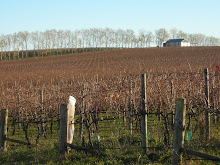
Henschke Hill of Grace under screw cap


I wonder what my former colleagues at the wine investment fund would say to Henschke bottling its 2005 Hill of Grace under screw-cap. In fact, I probably know and the result would be Hill of Grace being struck off the list of fund options.

Not because it's Australian, or because it's not expensive enough, but because it has now descended to the screw-cap. This type of closure would, I suspect, be seen as denigrating to the wine and a likely confirmation that Hill of Grace was never worthy enough anyway.

The debate on screw-cap seems to go in circles, and with screw-cap being associated with cheap, easing drinking wines, most new world wines in Europe are labelled as such.

At a recent Pinot Noir seminar I attended in Italy, the international pinot evening saw more than one person turn their nose up at New Zealand pinots bottled under screw-cap. Only some more discerning drinkers were prepared to consider it viable, seeing the practical benefits and the commercial benefits, too.

I suspect with a Hill of Grace endorsement, the international market may slowly come to realise that screw-cap is a kind of quality control; a mark that a wine's quality is in tact, rather than an indication of cheap, un-ageable wines not destined for the cellar.

For more information and an interesting comparison on screw-cap and corks, complete with tasting notes, see The Age. Thanks to Ian from the OzWine group for the tip.

Tuesday, July 21, 2009

Brunello scandal investigation concludes


The results of the investigation into the Brunello scandal have been released, with 1.3 million litres of Brunello di Montalcino declassified from DOCG (Denominazione di Origine Controllata Garantita) to IGT (Indicazione Geografica Tipica).

In a more positive move, 5.4 million litres have been confirmed as conforming to the classification and hence have been released. The Brunello discipline rules that any wine bearing the Brunello di Montalcino name and the DOCG classification must be 100% sangiovese, with the original confiscation of the wine occurring due to accusations that varieties other than sangiovese had been used.

The original claim was made that the wine was modified to meet international, particularly US tastes, reducing the tannic nature of the sangiovese grape. Some high profile companies were involved, including names such as Antinori, Banfi, Frescobaldi and Argiano; and after a vote not to change the discpline, keeping the 100% sangiovese rule, charges to be laid are mostly of commercial fraud.

The other discplines of the area, including Rosso di Montalcino DOC and Chianti DOCG, also came under scrutiny, with the investigation involving the vintages from 2003 to 2007. 500,000 litres of Rosso di Montalcino have been de-classified to IGT and 150,000 litres of Chianti have also ben de-classified. 100,000 litres of IGT Toscana Rosso have been de-classified and are now destined to be distilled.

Source | Il Sole 24 Ore