 While it’s often an overused comparison to describe the city of Melbourne, it really is Australia’s version of a European city. If you’ve ever lived in a European city (not necessarily in the UK) you’ll know why the comparison is made – ordered streets and stately buildings are emblematic of a neo-classical style you’ll often find in cities like Milan or Vienna.
Sydney, compared to Melbourne, is much more higgledy-piggledy in its makeup. I’m currently reading a non-fiction book by Peter Carey called “30 days in Sydney: a wildly distorted account”, in which, on a visit to Sydney, Carey examines the history of the city and how it has shaped what it is today. The author is originally from Melbourne, but lived in Sydney for many years and has evidently fallen in love with any suburb that is near to, or has, harbour views. This aside, he makes a convincing case for how much the colonial (or criminal) past has formed the current, and stunning, example of a metropolitan centre.
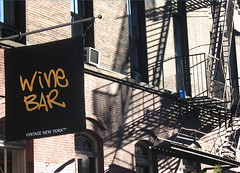
What has all this got to do with a wine blog, you might be asking. Well, it’s interesting in that according to The Sydney Morning Herald, the wine bar scene in Australia is returning to Sydney.
It must be first noted that by “wine bar scene” it is meant bars that previously were successful in Melbourne only, and that have a large range of various wines, served by the glass. Such sophistication was previously the exclusive domain of Australia’s European city. Red light districts and hard clubbing were reserved for Melbourne’s colonial cousin, Sydney.
I find the article interesting because it shows a struggle in Sydney’s hospitality sector that has often missed the mark on combining laid back, but refined, service. A friend of mine who recently hosted some international visitors in Sydney, said their only comment on Sydney’s bars and pubs was that it was a very pretentious city. Intriguing, when Sydneysiders are often ready to accuse Melburnians of being the snooty ones.
I also find the article interesting because an acquaintance of mine in my sommeliers course is somewhat of an entrepreneur, managing a restaurant and brewery in Milan, and a seaside resort in Brasil. On meeting me, an Australian in the course, he kind of floated the idea of what it would be like to open another business venture, this time on Australian shores, along the lines of a new wine bar.
While I couldn’t give him any advice as to a foreigner opening a business in Australia, my first advice to him was to open a wine bar in Melbourne, and forget the Sydney scene. I think only time will determine whether Sydney’s wine bars will be successful.
Image | Flickr