Not quite, but I am nearly over the moon after reading Neal Martin’s piece on his visit to the famed Romanée Conti cellars. Neal writes for Wine Journal on Robert Parker’s website, and you have to subscribe to read the articles, which means I can’t produce a link here.
But I will faithfully quote the writer who is probably the envy of many wine writers, drinkers, traders etc. who consider the Domaine as the Mecca of wine around the world, as he is one of the few to have had a personal tour of the cellar (at least he makes it sound very exclusive).
Anyway, he met the “self-effacing proprietor Aubert de Villaine” and had a little tour and a little taste of Vosne-Romanée 1er Cru Duvault-Blochet, La Tâche and Romanée-Conti from the barrel.
After some tasting notes, or bragging, about the above-mentioned wines, Neal says:
“I then ask him about his quote that: ‘Pinot Noir not tasting of anything’, a phrase I know is completely taken out of context, but pertinent and a truism all the same. He describes Pinot Noir as being “elusive”, a grape difficult to cultivate outside Burgundy; a grape that responds and obeys its terroir.
“Have you had any good experiences outside Burgundy?”
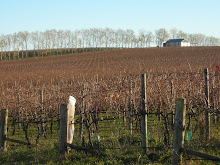
“A Chalon ’69,” he replies and then upon further consideration. “Otago. Some nice Pinot Noirs from Oregon and Mornington Peninsular.”
And there you have it! Australia gets a humble and little known geographic treasure into the books of the world’s greatest pinot noir winemaker.
P.S Perhaps my joy was more overcome by gloating to my Italian colleague who works with me in a largely French-tinted company which snubs anything new-wordly and which is buying bucket loads of Romanée-Conti 2005. I said “If you ever want to thumb your nose at Aussies wines again, just remember that Australian pinot was cited by Aubert de Villaine. I don’t see any Italian pinot mentioned.”
Thursday, September 4, 2008


Tuesday, September 2, 2008
Italy's restaurant industry in crisis: waiters abandon the profession

The weekend edition of Milan’s newspaper Corriere della Sera, had a great piece on the crisis in Italy’s restaurant industry. The feature article examined the fact that the profession of the waiter is in serious decline.
The article revealed that old-style service and waiters can now only be found in upper-class restaurants as people, especially young people, abandon the profession. And I should imagine the same goes for being a sommelier.
The reasons behind the move away from the service industry as a full time job include the low pay, most of which is also what Italians call “black money”, meaning you’re not on the books. Statistics show that nearly 36 percent of people working in this industry are in unregulated work circumstances, meaning while many taxes go unpaid, wait staff are unlikely to receive the minimum 1,000 euros a month for 40 hours a week work, as stipulated by law.
Italy’s institute for hoteliers reveals that in hospitality schools, 70 percent of students are choosing the kitchen, rather than the dining room, as their choice of profession; meaning that chefs have a boost in image, while waiters struggle to increase their ranks with professionals dedicated to a career.
Upper class establishments, including luxury hotels, are becoming the last bastion for professional waiters in Italy. The owner of Harry’s Bar in Venice, Arrigo Cipriani says: “Waiters providing service take away 35 percent of earnings. The cost of personnel on the whole is 53 percent, compared to 29-31 in England.”
Admittedly, Harry’s Bar has a total of 78 employees, 23 of which are waiters dedicated to service only. It’s a big establishment, but as revealed by other restauranteurs and hoteliers, it’s difficult to find professional staff.
For me this is not a problem restricted to Italy. I worked some dodgy waitressing jobs in Sydney and none of the owners paid taxes on their staff, and none of the establishments paid award wages. In Australia, as in other countries, it’s considered the part time job for students, which is why many restaurants have appalling service and extremely high staff turnover.
Even students though, are shunning the profession, as reported by a café in Sydney a while ago who couldn’t even get a backpacker to do the day shift at $20 an hour; I used to waitress at half that.
Apart from limited social time and skipped weekends, the waiters’ profession can be rewarding if you have the right training and work in the right place. I think you have to love the grind of it, though, and you should always come away from your shift with at least one gratifying episode.
As shown in the Corriere article, being a waiter is now reserved for really top notch Italian restaurants. The profile on Umberto Giraudo, head waiter at Rome’s three Michelin star restaurant, La Pergola, reinforces this. La Pergola is the Rome Hilton’s restaurant and Giraudo has had the opportunity to learn different languages and travel the world with his profession. He now works with internationally renowned chef Heinz Beck, and has served some of Italy’s VIPs, once receiving 1000 euros as his biggest tip.
But I think at this level we’re talking complete devotion, not just dedication, to the art of being a waiter. And who wants to skip their Saturday night for low pay to cop a rude customer and a boss who’ll work you into the ground?
Sunday, August 31, 2008
Food and wine matching: Franciacorta sparkling match

I had a wonderful weekend, making dinner (two courses with a bought third course from a local pastry shop) and playing with some wine and food matching. It took some imagination as I spent a week just thinking about the menu, let alone the wine to go with it.
First course was pasta with saffron and bresaola, a special cured beef among some of Italy's greatest salame and cold cut meats. The spicy saffron should offset the sweeter bresaola.
The wine match turned out to be a bit of a challenge and my colleague and I mulled it over in the office. We discarded anything that was too alcoholic or full bodied, preferring a wine with higher acidity such as a riesling. Our enoteca, or wine shop, had a gerwutz traminer, sauvignon or champagne available.
After my colleague made a couple of phone calls to some expert drinkers, one of whom frequently eats in Michelin star restaurants, it was settled that a champagne would be the best bet, to clean the palate.
Given that champagne is a little out of my budget, and my local wine shop didn't have any, I went with a Docg Franciacorta brut from Le Marchesine. It turned out to be a good choice. The wine is a chardonnay, pinot bianco and pinot nero blend, with a floral bouquet and some strong bread overtones. I was particularly impressed by the perlage though, very fine and elegant.
The second course was beef fillet with a side sauce of tomatoes, french onion and sultanas and side dish of potatoes with rosemary. I didn't do any specific wine searching for this, pulling out a bottle of Triacca's "La gatta" 2001 vintage, which I already had at home.
Triacca lies in the northern region of the Valtellina valley, though I will write more on the valley later as it's a special place for me. Valtellina wines are made exclusively from the nebbiolo grape. "La gatta" is a reserve wine, which in Italy means it has undergone a longer ageing period prior to bottling. This went through 30 months in oak barrels, six months in steel vats, and finally another three months in the bottle.
This provided some good drinking pleasure as an intense wine but with good structure. Both the alcohol levels (13%) and the tannins were well-balanced.
And we pass to the third course which was a slice of ricotta cake and a "delizietta" which is cake with marmalade in the centre and curshed nuts and honey on the top. I opened a bottle of sweet that was given to me, a "Recioto" from the Cantina Valpolicella.
The Recioto is a sweet red wine, from local grape varieties, which has a strikingly intense, sweet but spicy nose. I was well impressed, and it made for a great match. The special thing about this wine is that the grapes are put out to dry before the wine making process begins. This is called "appassimento" and is a common practice in Italy, even for some of the big reds made for longer ageing.
Subscribe to:
Posts (Atom)