Wednesday, December 17, 2008

Travelling with wine: sending wine to Australia, part one


I’m currently undergoing my first attempt to post wine to Australia from Italy which could prove to be a hilarious exercise in showing that the Italians, unfortunately, are really a disorganised race.

I believe Italy is a country unparalleled in its rich offering of wines – it has truly everything, not always at high quality but if you go exploring, you will find some real wine gems in Italy. So the first step, and the hardest, was deciding what to send.

I settled with a slightly eclectic and simple mix that wasn’t too expensive, bearing in mind I couldn’t guarantee that it wouldn’t be confiscated by Australian customs. So currently sitting in Alexandria airport, Sydney are a couple of bottles of Greco di Tufo and Taurasi, grape varieties of Greco and Aglianico from Campania; and a couple of bottles of Valtellina nebbiolo as that’s my home ground in Italy.

You may think I wasted my choice, but I believe they will still be appreciated and as they’re destined for under the Christmas tree (or in the cellar where they probably won’t stay for long), we’re about drinking and sharing here, not impressing. Depending on success, more significant bottles may be destined for future shipment.

Australian customs has done the usual routine enquiries regarding alcohol shipments and here’s hoping that they wines will soon be released to the family. In which case, the shipment to Australia via Italian post/FedEx was simpler than the shipment of the wines from Campania to Milan. Why? Because the first transporter got the address wrong.

They decided to ignore all instructions and instead of delivering to my house, delivered to English school I used to work at in the same building who, luckily knowing me, decided to sign for the wine anyway. My former colleagues then forgot to inform me that six bottles of wine were sitting on the classroom floor, and I came across them one evening when I popped in to say hello.

The response from the transporter: when were they going to get around to telling me as they had their entire network searching for the whereabouts of the wine...? My response: perhaps you should have delivered them to the correct address in the first place. On my pointing this out, the guy on the phone politely wished me a pleasant evening, and promptly hung up. Episode two on the eventual whereabouts of the wine will continue this week.

Thursday, December 4, 2008

Wine tasting in Italy: Conti Sertoli Salis in the Valtellina

While this shouldn’t be a blog about “what I did on my weekend”, when that has been wine tasting or cellar visits, then I figure I can include it. Two events I’ve been to recently have been quite different one from the other, and have certainly taught me if not about wine, then about people.

A while ago I had the pleasure of a cellar visit and wine tasting in Italy, in Lombardy’s Valtellina region. The evening was organised by the Italian sommeliers association at the Conti Sertoli Salis company, in the old palace of the noble family’s original house.

The wine tasting was one of old vintages of Salis wines which, typical of this region, use the nebbiolo grape. While the first two wines were disappointing, a little over the hill in my opinion, the evening built up from the Valtellina Sforzato Canua, to the ‘grand cru’ from Salis – the Feudo dei Conti, in its first market release.

It was a pleasant enough evening, but I didn’t walk away having bought any wine. This is a problem given what we consider the purpose behind these wine tasting events to be. I just didn’t feel captured enough to purchase and the purported “old vintage” prestige was lost on me.

The thing that fascinates and disappoints me about Italy is its stubborn and undemocratic insistence on the aristocracy. While the current management of Conti Sertoli Salis doesn’t have much to do with the historic Italian Count family’s ownership, the material we were given on the night, and the website, is a lot about their prestigious and pedigree roots.

Can’t we just make good wine? This is a topic I will possibly return to, and it could be my stubborn insistence on Australian egalitarian values (sometimes an exercise in smoke screens with us, too). But given that the Conti Sertoli Salis representative at a recent wine tasting open to all sommelier members refused a friend of mine service of an expensive bottle (the Feudo dei Conti I suspect), as he wasn’t a distributor, I feel it’s pertinent to the discussion. Only an economic outcome was good enough to warrant a taste.

This is highly disappointing because the Valtellina, despite contrary accusations, is more friendly and welcoming than that; and frankly 54 euros for an un-established wine from the Valtellina is a price outside of the market norm. The Feudo dei Conti is a good wine, but it has to play the game in the valley as well.

Wednesday, November 19, 2008

Vermentino from Australia

An interesting discussion came up on our Ozwine group mailing list on the grape variety, Vermentino. I have just recently had the opportunity to try some vermentino, traditionally a variety from Liguria, Tuscany and Sardinia in Italy.

I have been sampling some Sardinian wine recently, one of which is a Vermentino di Gallura DOCG from the wine coop Giogantinu. The wine has 13% alcohol and is very soft and inviting, with a thickness on the palate which lets you know you’re drinking hot climate white wine.

I also recently tried a Vermentino from the Montecucco area of Tuscany. It turned up most surprisingly at a dinner I was at recently where French wine should have been the protagonist. Unfortunately I didn’t get the producer’s name, but this was a far more elegant, fresh and subtle example. Really worth a try.

The discussion in our Ozwine group came up with Australian vermentino examples, including Brown Brothers, Foxey's Hangout the White Fox Vermentino and Mudgee growers, Di Lusso, who specialise in Italian varieties (thanks to Ozwin-ers for the tips!).

All this comes down to the fact that after my explorations of Italian vermentino, I will have to try the Australian interpretation of Italian wine, and try some “true blue” vermentino when I’m home at Christmas. It could make for the perfect summer aperitif.

Wednesday, October 29, 2008

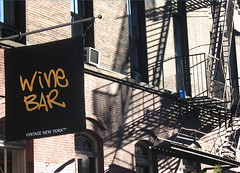
Wine bars in Sydney

While it’s often an overused comparison to describe the city of Melbourne, it really is Australia’s version of a European city. If you’ve ever lived in a European city (not necessarily in the UK) you’ll know why the comparison is made – ordered streets and stately buildings are emblematic of a neo-classical style you’ll often find in cities like Milan or Vienna.

Sydney, compared to Melbourne, is much more higgledy-piggledy in its makeup. I’m currently reading a non-fiction book by Peter Carey called “30 days in Sydney: a wildly distorted account”, in which, on a visit to Sydney, Carey examines the history of the city and how it has shaped what it is today. The author is originally from Melbourne, but lived in Sydney for many years and has evidently fallen in love with any suburb that is near to, or has, harbour views. This aside, he makes a convincing case for how much the colonial (or criminal) past has formed the current, and stunning, example of a metropolitan centre.

What has all this got to do with a wine blog, you might be asking. Well, it’s interesting in that according to The Sydney Morning Herald, the wine bar scene in Australia is returning to Sydney.

It must be first noted that by “wine bar scene” it is meant bars that previously were successful in Melbourne only, and that have a large range of various wines, served by the glass. Such sophistication was previously the exclusive domain of Australia’s European city. Red light districts and hard clubbing were reserved for Melbourne’s colonial cousin, Sydney.

I find the article interesting because it shows a struggle in Sydney’s hospitality sector that has often missed the mark on combining laid back, but refined, service. A friend of mine who recently hosted some international visitors in Sydney, said their only comment on Sydney’s bars and pubs was that it was a very pretentious city. Intriguing, when Sydneysiders are often ready to accuse Melburnians of being the snooty ones.

I also find the article interesting because an acquaintance of mine in my sommeliers course is somewhat of an entrepreneur, managing a restaurant and brewery in Milan, and a seaside resort in Brasil. On meeting me, an Australian in the course, he kind of floated the idea of what it would be like to open another business venture, this time on Australian shores, along the lines of a new wine bar.

While I couldn’t give him any advice as to a foreigner opening a business in Australia, my first advice to him was to open a wine bar in Melbourne, and forget the Sydney scene. I think only time will determine whether Sydney’s wine bars will be successful.

Image | Flickr

Tuesday, October 28, 2008

Sommelier qualifications: a touch of class

One thing I have been particularly impressed with in our sommeliers’ course is the calibre of the teachers, or lecturers. Most of them have been introduced to wine through sheer passion for the subject and many are not necessarily sommeliers by profession.

While this might indicate a lack of qualification, it actually means that firstly, we get lecturers who understand our position as novices, and secondly the lecturers often have an incredible array of general knowledge and culture.

So far, during our lessons, Dante has been quoted, events in papal history have been touched on and journalists have shared their film watching habits with the group (and it was James Bond, not Sideways, that was quoted). I have been particularly impressed with Matteo Longhi and Guido Invernizzi who are both medical doctors with an incredibly profound expertise in, and passion for, wine.

This proves to me that while it is always good to read anything that’s available on the wine sector, it is also essential to continually cultivate a broad understanding of diverse topics that may enrich our experience of wine. It is a beverage that has fascinated mankind for centuries, and I am certainly undertaking an entire educational experience, particularly in Italian history and culture, and am not just undergoing a wine tasting course.

This is true of my work in our trading company too, as issues that we deal with daily range from the effects of the economic crisis on the wine industry (naturally!), issues in the agricultural sector, including new legislation and vintage quality, import and export law and EU regulations, along with general marketing opportunities and trends in wine consumption (for example which champagne is currently in vogue).

This is only a general overview and doesn’t have much to do with high brow culture, though it’s all linked – I believe especially for anyone whose profession is sommelier. There is something extra that should be required of a specialised wine waiter that has much to with an air of general intelligence and the ability to serve any customer, with confidence that you’ve got a grip on the entire tradition behind the product you’re proprosing.

An interesting footnote to this is the European Sommeliers Association award for best sommelier communicator. This award was inaugurated in 2007 (won by Juan Munoz Ramos) and goes to a charismatic leader in the wine industry dedicated to training, education and communication initiatives.

In Australia in 2008, the Wine Communicator of the Year Award went to Huon Hooke (an appropriate choice) for his work in journalism and wine judging. He has been writing about wine for 25 years, showing that sharing wine experiences is what we’re all about.

Thursday, October 23, 2008

Chianti tastings: what's wrong with me?

I expect it’s probably heresy to say that you don’t like Chianti, or sangiovese or Tuscan wine in general. So I’ll start this post with a couple of caveats: I haven’t tried much of this style and haven’t attended many Chianti tastings. In addition, sangiovese is not really a choice of wine I normally go for, and I haven’t had many good examples.

But! at our lesson on Monday on Tuscany, I’m afraid the examples we tasted didn’t do much for my Chianti loving experience. This is also probably because the wine was too young, and if you know anything about sangiovese, you’ll know its tannins need time to settle down. Also, good examples of Tuscan wine are expensive and let’s face it, a sommelier’s course costs enough already without having the pretence to serve the best wines.

These wines, for me, need food. While the nebbiolo we have tasted so far was pushing into what the Italians call a “meditation” wine, the sangiovese needed some nice Tuscan meat (possibly chianina?) to go with it. So my Chianti drinking and Tuscan wine experience needs some nurturing, unless I get hold of a Bolgheri after which I imagine I will be converted to Tuscan wine (at the right price).

Tuesday, October 14, 2008


I mentioned in a recent post that Italy's nebbiolo grape variety is...well, pure bliss. I love nebbiolo, and I'm not afraid to say it. If it's nebbiolo aged in barrique, better again. I like to chew my wines and unfortunately at my sommelier course, our nebbiolo tasting is likely over as we have already looked at both Piedmont and Lombardy, which covers the two Italian regions that produce nebbiolo.

The first nebbiolo we tasted was a grand Barolo from Pio Cesare, from the 2003 vintage. This was a hot vintage in Italy, and produces wines that are perhaps less classic in style, though I appreciated this Barolo for its complexity. There was an ocean of perfumes, with plenty of varied spice dominating the nose.

The second nebbiolo was from the Valtellina, which can be considered the poor cousin of Barolo, though I like to think of it as great nebbiolo at more affordable prices. The Valtellina is home away from home for me, and it its, and my, hear, is nebbiolo. We tasted a sforzato, which is about as prestigious as you can get around these parts.

It was a Triacca, San Domenico sforzato, vintage 2003, and again it displayed an array of spices, though less vanilla than the Barolo. There were complex balsamic notes, leather and underbrush aspects, and the tannins were perfect to balance the 14.5% alcohol. Sforzato is made through a process of drying grapes, called appassimento, which is the same as the wine making of Amarone, to produce high alchol wines.

So, all in all I am satisfied with our tasting so far! I am having a visit home to Australia at Christmas and though it's not necessarily a wine for a hot summer's evening, I'll be keen to try some Australian nebbiolo when home.

Last week's wine of the week from Wine Pages, was a Trentham Estate La famiglia nebbiolo, from NSW. I'll leave aside what I think is becoming a stubborn insistence on screw cap in Australian wines (and I'd hesitate to describe nebbiolo as light-bodied), and say that the wine is intriguing all the same. It's matured for 18 months in French oak, so I'd expect some lovely soft oak characteristics. At this stage, I'd buy the wine for its beautiful label.

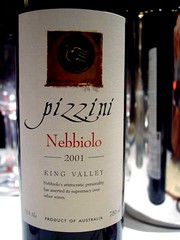
In addition, Franco Ziliani's WineWebNews from the Italian Association of Sommeliers celebrates this Australian wine industry experimentation with a post on Coriole's nebbiolo rose. That an Australian nebbiolo rose can make it to Italy with some positive news is a big step - the convincing is in the drinking. This is in addition to more well-known and successful efforts in Italian grape varieties from Pizzini.

So, could my love of nebbiolo be met on Australian shores too? Only time and plenty of tasting will tell...

Photo | Flickr

Friday, October 10, 2008

Perfumes in wine: how to learn a wine's bouquet, descriptions and a sommelier spice nose


The advice from our first lecturer in our sommeliers course is numerous and varied but one thing she said was that you can never identify a perfume if you can’t recognise it. She gave the example of an aromatic traminer and a group of teenagers that she once had to do a lesson with on wine tasting.

She had chosen traminer for the very fact that its aroma is unmistakable – it’s not called an aromatic grape for nothing. The students probably smelled wine and that’s about it, but one guy said “it smells just like lychees”. To say the audience was floored is to say little. But it was around Christmas time, lychees in Italy are in great supply and it happened to be his favourite fruit. Moral of the story? Know your perfumes.

What does this mean for an Australian in Italy learning wine tasting techniques? First of all, I need to gain some European knowledge, especially about plants. There are certain rules about wine tasting, one of which goes thus: white wine – white flowers and white fruit, red wine – red flowers and red fruit. Which is fine if you know your flowers.

My parents had a modest cottage garden in Australia when I was a child, but it soon evolved into something more native, and certainly didn’t include violets or peonies – just two of the flowers we’ve supposedly smelled in wines this week. My first step will be to learn the flowers in Italian. While some are similar, others are very different – hawthorn, for example, is called biancospino. My second step will be to start recognising the smell of these flowers, as I certainly don’t know what hawthorn should smell like, let alone recognise it in a glass of white wine.

I sometimes wonder if I said something smells like eucalyptus, whether that would be an acceptable and legitimate response. My resolution is to now discover the various wine perfume groups and their components. This will involve smelling and memorising various pices, herbal, vegetal, fruit, flowers, animal and ethereal components.

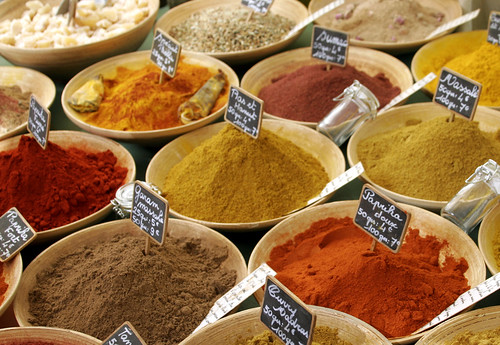
My first attempt has been unsuccessful as I entered a “drogheria” which is an old-style drug store in Italy, which sells spices, sweets, herbs, oils, salts and the like. I asked if they had a mixed confection of spices and they answered in the negative, saying they only sell various spices by weight. My plan was to sample and smell and memorise. After all I don’t smoke, and don’t really know what pure tobacco smells like. While I was tempted to buy something for home anyway – far more romantic than the jars of Ducros herbs and spices you get in the supermarket – I was somewhat disheartened and far too embarrassed to say I was on a research mission for my sommeliers course.

The flowers beckon, but I think I’m in for a tough challenge.

Photo | Flickr

Thursday, October 9, 2008

Italian wine and grape varieties: the indigenous Nero d'Avola


Our sommeliers course is coming along like a house on fire after only two lessons, but then given the second level is all about Italian wine and Italian wine making regions, the material is so rich it’s hard to get beyond just touching on each region.

The first lesson this week was a review of how to taste wine – the descriptions you can give, serious measurements of wine quality etc. The Italian Sommeliers Association has a list of parameters and measurements that include intensity, complexity, harmony, after-taste persistency etc etc. But more on that later.

This week we tasted a Nero d’Avola, and after my father asked me about this wine and its variety, I thought I’d give it some greater analysis myself. Nero d’Avola is a native Italian wine, and an indigenous grape variety of Sicily. It is a red wine and it happens to be one of my favourites (though nothing for me from the shores of Italy will ever beat nebbiolo).

We tasted Deliella’s version, which finished with 88 points for the nero d’avola. It’s a wine that costs about 40 euros at a wine shop and so on my buying a second sample this week (purely to consolidate our lessons, you understand) I unfortunately had to acquire a less expensive wine.

My second nero d’avola shares many of the characteristics of the first, with a little less complexity. I’m drinking it too young, but then it’s difficult to find an enoteca (Italian wine shop) that will have any vintage beyond recent ones.

Deliella’s wine was filled with a bouquet of spice mix – everything from cocoa to tobacco and some under brush in between. Our lecturer that evening said that nero d’avola has a perfume all of its own and is very distinctive when you learn to recognise it – the perfume she was referring to was a brackish, sea-salt air smell. To push your imaginations a little, she’s right. Even my cheaper variety had this aspect, so we’re at least a step towards recognising the variety in a blind tasting. I think it also has a green wood smell – like raw pine.

I have seen this Italian wine in Australia, which so far has gone under-appreciated in Italy itself. I think it could have an export future as it's closer to an Australian palate than some northern Italian wines I've tasted. For being snubbed a little in Italy, I’m not sure if it’s a perception that there is a lack of wine growing tradition in Sicily, or if it just suffers from being a southern wine, but this Italian variety is definitely worth looking out for. Just don’t drink it too young.

Tuesday, October 7, 2008

Wine courses in Italy: becoming a sommelier and wine tasting Italy's regions


Autumn is going to be a very busy season for me, full of wine tasting events, not to mention the second level of my sommelier course.

I completed the first level of the Italian Sommeliers’ Association course in 2007, which requires more effort than most wine tasting courses in Italy you’re likely to come across. The first is about wine tasting techniques – examining the look, smell and taste of wine and how to analyse it while also learning the language parameters to describe wine.

The introductory level also presents lessons on wine production, oenology, spirits and liqueurs, the role of the sommelier and Italian wine legislation, among other topics. It’s a broad introduction, but effective enough for those who then want to develop their knowledge and tasting technique.

Things are heating up in the second course which obviously presumes a far more evolved student in terms of their theory and wine tasting experience. It must be said this is still a course for amateurs, and probably not recommended for whoever wants to become a fully-fledged professional sommelier.

The second level presents Italy’s wine growing regions and its DOCG, DOC and IGT classifications in depth. In terms of wine tasting, it also introduces a points system to judge the overall quality of a wine, rather than limiting the taster to observations and wine description. This will likely have me brushing up on the vocabulary and theory from the first course before assigning any points anywhere, and could see me doing plenty of swirling and smelling at home.

The first lesson had reassured me about how much I haven’t forgotten (but thought I had) from the first course, but then I was gripped by panic about how much more I have to learn and my startling level of ignorance. But I got the coffee perfume right with the Nero d’Avola...let the challenge begin!

Sunday, October 5, 2008

Wine industry innovation: international exchanges in the wine sector

In Decanter’s September issue, Margaret Rand takes a look at the kind of exchanges that take place between the new world and old world of the wine industry.

I had a discussion with someone today, the nature of which made me question whether this constant dichotomy between new and old is helpful, but as it still exists and the wine industry is likely to continue down this split line, I’ll probably continue looking at things in this way, too.

The Decanter article was good because I think it highlights the point that I made in my last post – that Australia has a reputation for innovation in the wine industry. This is excellent for the Australian wine industry which, as I have said before, too often limits itself to a definition of quality for money (rather than just quality full stop).

The innovation goes beyond the use of screw caps and eye catching marketable labels. An interesting example came from Spain’s port-marking region and David Guimaraens, who went from Fonseca Port to Roseworthy Agricultural College to gain the empirical knowledge required to modernise the port making practices in his family business.

Another example, so pertinent in times where climate change is on everyone’s lips, was that of Philippe Guigal from the Rhone region in France, who was streaks ahead of his other wine maker counterparts during an extremely hot vintage. Harvest and racking and fermentation techniques to reduce the impact of a hot vintage were learned during his time in Australia and California.

But what about Australians travelling ‘back’ to the old world for an insight into how things are done in Europe..? The examples given here is exactly what is needed in these parts to show Europeans that Australian wine can compete with the best of them. The examples are what I needed in recent debates with a colleague over the use of chemicals and the lack of a ‘cru’ system in Australia (I will examine this topic at a later date because it was a particularly fascinating discussion we had).

Yalumba has perhaps pioneered the use and diffusion of the Viognier grape among Australian wine, and it learned this through a trip that Louisa Rose undertook to the Rhone. While she says that things weren’t that different in the Rhone, at least she was reassured that Yalumba was moving in the right direction.

The example I loved most was that of Vanya Cullen from Cullen Wines in the Margaret River, who is now employing bio-dynamic production in her vineyards. I am really impressed with the direction bio-dynamic wine making is taking, and the coverage it’s getting. Apparently it is one of the best ways to express terroir and I think Australia needs to get back in touch with its roots – that is to say that anything that increases the terroir expression of Australian wines, is a positive thing. The one thing that Cullen points out, that should be noted by anyone from Europe who thinks the new world lacks heritage and terroir, is that Australian soil is older than that in Europe. Bio-dynamics for Cullen, is all about risk taking for future sustainability. Climate change is again a key factor here.

While Decanter did the leg work on the article and provided some nice profiles, it didn’t really have a conclusive argument to make about the benefits to be had from these kinds of exchanges. I would hazard that they could prove to change the wine industry, both old and new, unfathomably.

Tuesday, September 30, 2008

Wine industry innovation: how does Australia fare?

One of the best publications I’ve seen in a while is Fast Thinking, which appears to have emerged recently in the wake of the Rudd Government’s innovation review this year.

I read the Autumn 2008 issue which covers a wide variety of topics from environmental practices and water conservation, to what makes a good CEO.

The most interesting article in this issue for me was “Dumbest Country in the Southern Hemisphere?”, which examined Australia’s history and notoriety as a creative country and whether innovation is really a priority in the current era.

The article, by Lia Timson, points out that Australians are very good at naming some of our national inventions (the wine cask being one), but that our smallness of mentality and tendency to comparison hold us back.

I would like to think that Australia is “nimble, and can implement innovation faster”, as Tim Pethinck from WhatIf! says. But he also says we have a limited knowledge of the local consumer and tend to follow overseas trends. Not long after the article was written, he experienced the closure of the Australian office of WhatIf!, saying that innovation goes unappreciated, and under-invested, in Australia.

In a report from marketing consultancy The Leading Edge, it was revealed that Australian companies were good at following new trends, and launching new products, but that a change in consumer behaviour was not forthcoming. In addition the article reveals that Australians are confident innovators, but not in Australia (this from Richard Webb, founder of Blue Freeway).

I have personally seen, mostly in workplace situations, Australia’s lack of interest or confidence in creativity and risk taking. I have also seen a lack of confidence in local talent. I doubt whether this is a peculiar Australian trait, but when you can be exactly the opposite, why not?

While all this may not have much to do with the wine industry, I think Australia needs another reputation than great wine at cheap prices. And seeing as I’m definitely not an expert, it probably needs to be made clear what innovation is, how to encourage it, and then how to use it. There’s no point sitting around “innovating” (next biggest excuse for procrastination?) if there fruits of this can’t be utilised in some way.

I think Australia’s wine industry does have a reputation for innovation – or at least a freshness of approach. Which is more than I can say for where I work now – we run an entire wine investment fund off an excel document; the users are faulty, not the program itself, but with some software we could find (or develop!) the level of innovation, and therefore resources saved, would be highly beneficial.

Wednesday, September 24, 2008

Wine industry innovation: Italy after Brunello

De Vinis, the official publication of the Italian Sommeliers Association (Associazione italiana di sommelier – AIS), recently featured an interview with Luca Zaia, Italy’s new agricultural minister.

That Italy has a new government will come as no surprise to any of us; it is also a more right wing government and Zaia comes from the Northern League party – considered one of Italy’s most right wing political parties around.

But for the purposes of the post, I’ll leave politics aside as the intricacies of Italian politics are beyond my comprehension and serve no use here. A word of introduction though is required to put this interview into context.

Italy is virtually beyond crisis in Europe. It’s economy is at a stand still, or worse, in decline, it’s labour market is woeful and it’s losing ground to new EU entries and other stalwarts of the Union that have traditionally been countries that Italy could count on as being worse placed than itself (Spain, Greece and Portugal come to mind). The country is, in short, stagnating.

Why should agriculture then, be so important? The fluffy side of me says it’s about the long held and respected Italian lifestyle and Italian traditions. It should also be noted that this is not just for the south, but the north as well. It’s also a lot about money and the economy – who Italy will feed on its local turf, and who it will export to. And the wine industry goes to the heart of both.

The interview between De Vinis and Luca Zaia is relatively soft, but interesting all the same. The minister’s solution to the stagnation mentioned above can be summarised in one word: innovation.

Zaia says that what the Italian agricultural industry needs most is innovation. “Agriculture and whoever has anything to do with it, needs innovation from any point of view.”

At this point in my post it is prudent to keep in mind the Brunello di Montalcino scandal and all it stands for. I cannot here, take down everything that’s been written and said in recent months on this issue, but its impact in Italy is not to be underestimated. In future the episode will represent a culmination of Italian embarrassment, shame and anger that I hope will resolve itself in time. The concern over the image of the Italian wine industry both here and abroad can’t be overstated.

The minister says: “Italian wine needs investment and services, to be supported by a strong institutional presence in the international promotion of our wines.” He mentions that Italian wine has reached more than three billion euros a year worth of export for the country.

While Zaia doesn’t specify exactly what innovation will be undertaken and how, I think he’s hit the nail on the head as to the direction which Italy, and Europe generally, needs to follow. I’ll follow up this post in the next couple of days as it’s a theme I’ll likely return to. But in the meantime it gives us something to think about, while I search out some examples of Italian innovation in the agricultural industry that go behind “nice” agriturismi, culinary tours and Chianti wine tastings. Italy is, after all, a creative country.

Sunday, September 21, 2008

Wine list pricing and BYO - what can the consumer expect?


After discovering this new Italian wine variety, “Gavi”, I thought I’d track it down in the supermarket to have a second tasting and perhaps record my tasting notes.

While there were a couple of options from different producers to choose from, I was looking for “Terre da Vino” Gavi as that what we’d drunk in the restaurant. I found it at an excellent price of five euros.

In fact, the price was so good, it highlighted the huge mark-up that our restaurant had put on the bottle. On the wine list, Terre da Vino Gavi was could be found for the princely sum of 15 euros. What’s more, the producer was not named so that it could be Gavi from anyone – in this case, you’re buying the wine style, not the producer, which is not so common in Italy. It would be like buying chianti from anyone, which would result in vastly different styles and pricing.

The price difference begs the question as to how much of a mark-up is considered good practice in Italy. My boyfriend and I had an argument about this, because he thought it was reasonable to expect that increase on a bottle costing five euros in the supermarket (which would in turn have put its own increase on the bottle).

He said it was unlikely you’d find that increase on a bottle costing 100 euros, but still we’re talking about a 200 percent increase! This is from a supermarket to a restaurant, so I’d be curious to know what the distributor prices it at.

While we will never see this in Italy, it makes a convincing argument for Australia’s BYO system here. In my opinion the Bring Your Own practice in Australia is appreciated by the locals and visitors alike, and has its place in middle range restaurants that can’t afford, or don’t provide for, an extensive wine list. I would not like to see it in more upmarket restaurants, but it is an innovative, and fascinating, aspect to the restaurant industry.

I once explained this system to a fellow student in my sommelier course, who thought it was great from a consumer’s perspective but who would balk at implementing it in his own restaurant. The debate emerged after a lesson about the role of the sommelier and the mark-up that could be expected. The argument went that a bottle of wine is not an in-house production of the restaurant, and the consumer is purchasing an extraneous product for his drinking pleasure, a practice which no restaurant should exploit.

So, here’s to Australian BYO restaurants, and the hope that they will be recognised as a legitimate dining choice, while we ask ourselves how much extra we can expect to pay, without feeling like we’ve just been the victim of a swifty by the restaurant and its wine list.

Thursday, September 18, 2008

International distributors of Australian wine

I have unfortunately discovered that my conundrum of how to find a good distributor Australian wine in Italy, with a respectable range is an ongoing one.

To give you an example, I’ll refer to some brief research I did yesterday on prices of Penfolds Bin 707, from the 90’s vintages. An email came through from British wine merchant Seckfords with some lots of 1993, 1994 and 1997 (I believe I recall) Penfolds Bin 707.

The lots, of six bottles, were available at a price of 50 pounds a bottle which isn’t a bad price. When buying from UK wine merchants most wines are offered duty paid meaning EU taxes are already included in the price, you don’t require any import numbers, no customs is to be paid on EU delivery and your only extra costs are delivery.

The 50 pounds turns out to be quite a reasonable price, but to come to this conclusion some investigation needed to occur. First of all I hopped onto the Robert Parker website to look at some vintage notes.

I’m not so interested in the points system, but I often find that Australian vintage notes are scarce and sometimes the site can be helpful on this front. It turns out that according to the site, the 1994 is the best bet for quality at this stage.

I then figured that there wouldn’t be much point in buying in the UK, if Italy had better availability, at comparable prices without the worry of organising a shipment.

I cannot, in all honesty, seriously comment on Austrade’s work in representing the interests of the Australian wine industry in Italy, so suffice to say they have a vino australiano website that lists the distributors of Australian wine in Italy.

Penfolds has an exclusive distributor in Italy, called Meregalli, who is conveniently holding a wine tasting day in Monza on Monday September 29. Despite the fact I’m supposed to be working that afternoon, I will endeavour to go.

But now price of a Bin 707 through Meregalli is listed, and there's no way of knowing whether they're a wholesaler or whether they also sell to the public.

So I also had a look at Peck, who sells at a whopping 143 euros for the 1998 vintage, and Enoteca Ronchi, who was reasonable enough at 126 euros for the 1993 vintage (over the hill?) and the 1997. The hunt continues...

Tuesday, September 16, 2008

Italian wine varieties: Gavi from Piedmont

I had a couple of friends stay with me over the last few days who, not only having bought me a nice bottle of merlot, introduced me to a new Italian wine that I never knew existed. And all this for a moment of Aussie humour.

My mate Gavin, in an excursion to the local supermarket, came across a wine called “Gavi” but decided not to buy it. On going out for dinner that evening, lo’ and behold! the wine was on the wine list.

After a bit of giggling at the wine table, we ordered the Gavi (changing the pronunciation from the Australian accent to something more likely to be comprehensible to the Italian waiter), and embarked on discovering an Italian variety I had never before encountered.

Gavi comes from the cortese grape, and the Piedmont region, province of Alessandria. The wine is DOCG classified and it is a white wine that I thought matched well to our food. Gavin reckoned it was like an Australian wine, and I think he was probably referring to how fragrant it was.

The merlot that was given to me is “La gioiosa et amorosa” from the Polegato family. This is an easy drinking wine, soft like a merlot should be and not as thin as most of the other more budget versions of this grape I’ve tried in Italy.

As I lack the memory of the producer of the Gavi we tried, I have resolved to carry a notebook with me everywhere I go that I’m likely to be wine tasting so I keep track of this stuff. But it’s likely to go on my list of wine white purchases in Italy and I recommend it, particularly if you’re looking for white wine options from Piedmont.

Thursday, September 11, 2008

Burning the taste buds of a bragging colleague

Don’t you just hate it when you have a know-it-all colleague who’s stubbornness means you’ll never ‘win’…?

I was having a nice conversation today with our VIP work experience student (that’s how I like to call him – he’s the son of the sponsor of a Very Important Group in the world of wine), who was asking me about the best wine I’ve ever tasted.

Hard question, but I’ll come to that another time. Anyway, he was actually quite interested in Australia and I expect being young he hasn’t yet been contaminated with the general snootiness of the rest of Europe to Aussie wine.

He was asking me about the drought problems when my colleague piped up mumbling about some oenologist he once met who said that Australian wine was all tainted with chemicals. I didn’t catch the whole story.

I asked: “Have you ever actually drunk any Australian wine?” To which he said: “I’ve tried to minimise any damage in that area.” Which I took to be a no. And on saying so to him, his response was: “You’re destroying the world with chemicals”, and the evidence of this is “it’s a known fact”.

Profound philosophical stuff for a Thursday afternoon. It disappoints me that despite all the good quality wine in Australia, will still can’t get ourselves respected through the wilful ignorance of our European counterparts. We’re talking about someone who works in the wine industry and it’s disturbing that there is no desire to develop the palate with other worldly adventures.

Maybe I’ll have to accept the fact that generally, Europe doesn’t care about Australian wine. The upside is that Australians don’t really give a frig about stuff from Europe either. And that’s a great thing for both consumers and producers in Australia as enjoying local wine is exactly what we should be doing.

A recent discussion on our Ozwine group forum showed that drinking habits in Australia are generally kept close to home and no-one strays too far from the back paddock. I don’t mind so much but in the interests of diversification, it would be nice to see the old world and the new get to know and appreciate each other – rather than mud-flinging chemical accusations.

Tuesday, September 9, 2008

Finding French wine in Australia (to then import to Europe)

Who says the Europeans know better than us? Welcome to the new world, in all its laidback professionalism.

I’ve had the rather strange situation of contacting an Australian wine shop, all the way from Italy, as part of our famous ongoing acquisition of Romanee Conti (2006 vintage this time). I expect it put a wry smile on the face of the guy who owns the shop.

Anyway, the point of this post is that my boss, in asking me to do this, requested that I make specific enquiries as to the “security” of these bottles – that is how they would be transported, covering them with insurance etc.

The thing that amuses me is that while Rathdowne Cellars might be small fry compared to what we’re used to, they were far more pleasant and professional in their response than other interactions I’ve had.

We’re very good at buying willy nilly all over the world, and the idea that more care was required just because we were considering a purchase in Australia, narked at me just a little (see my comments on jet lagged wine from the US for example).

Rathdowne Cellars gave me a quote on shipment from Australia to Italy which was not necessarily cheap, but neither was it outrageously expensive.

No cheaper shipping options are available though. Why? Because in the words of Cameron Kidd, store manager: “This is via my preferred air carrier with door-to-door freight. We do not use cheaper options like sea freight, as for small quantities I cannot guarantee it will go in temperature controlled containers.”

And to think I couldn’t even get wine shipped from England to Italy, with Christie’s (largest auction house in the world) preferred shipper in a refrigerated truck.

Sunday, September 7, 2008

Picchi rosé vs Bloodwood "Big Men in Tights": Big Men wins


I’m just finishing off what is probably my last rosé for the summer as temperatures are already dropping and I’ll head back into more red wine drinking.

But I’ve managed to find myself a fine Italian rosé from Picchi, producers in the Oltrepò Pavese region. It’s a region just south of Milan, around the city of Pavia which is making a name for itself with its efforts in riesling. Most of the riesling comes from the “italico” variety and not the “rodano” variety, generally considered the more prestigious of the two grapes, though you can find some of the latter around.

I found the Picchi rosé in my local bottle shop, and the owner of the shop was happy with the purchase as he buys directly from the wine maker. It’s not a shop with a large choice but it turns out the owner is informed but not a snob, who understands the price range you’re looking at and doesn’t try to flog you his expensive stuff because no-one else will buy it.

The Picchi rosé is made from “rara” grapes which is a native Italian variety, and it has a lovely rosy, soft raspberry colour, with brilliant clarity. In my opinion, it is exactly what the colour of a rosé should be.

It is light on the nose with perfumes of red fruit, particularly raspberry, but the best thing about this wine is its acidity. It really leaves you with a clean palate, and none of that sweet aftertaste some rosés suffer from.

I’m not a rosé drinker by nature and I was quite snooty about the wine at the beginning of my wine drinking experience because I considered rosés some dodgy half-way point for who couldn’t decide between red and white.

But they have their place in the wine spectrum, though I prefer mine exclusively for summer drinking, in the right dose and with the right food. While it would be interesting to try it, Antonio Galloni writes of the Vie di Romans from Ciantons which he says is a rosé “with the structure to stand up to the richest of foods”; which in my mind is not what I look for in a rosé, this being aged in oak and bottled without filtration.

My rosé drinking was awakened in 2007 by Bloodwood’s “http://www.bloodwood.com.au/styles.htm” – what a marvellous name and a great addition to the Bloodwood portfolio! The guy at the drive-in bottle shop in Orange, Australia, deceptively knew his stuff and said it was a wine that once opened, required finishing because it was a glass-refiller. And he was right.

From what I remember of this wine, it had more of deep cherry colour, and wonderful roundness in the palate, along with some great complexity for a rosé – in the end, I don’t think rosé is an adequate label. Big Men in Tights was much like its name – a great package hidden in humble red, and for anyone who hasn’t yet read Stephen Doyle’s descriptions, what the hell are you waiting for?! A sample for this wine: “Keep the dastards honest, stick this in the fridge, splash it in a glass and remind yourself once more, all this will pass!”

Photo | Bloodwood

Thursday, September 4, 2008

Move over Romanée Conti, Mornington Peninsula pinot has arrived!

Not quite, but I am nearly over the moon after reading Neal Martin’s piece on his visit to the famed Romanée Conti cellars. Neal writes for Wine Journal on Robert Parker’s website, and you have to subscribe to read the articles, which means I can’t produce a link here.

But I will faithfully quote the writer who is probably the envy of many wine writers, drinkers, traders etc. who consider the Domaine as the Mecca of wine around the world, as he is one of the few to have had a personal tour of the cellar (at least he makes it sound very exclusive).

Anyway, he met the “self-effacing proprietor Aubert de Villaine” and had a little tour and a little taste of Vosne-Romanée 1er Cru Duvault-Blochet, La Tâche and Romanée-Conti from the barrel.

After some tasting notes, or bragging, about the above-mentioned wines, Neal says:
“I then ask him about his quote that: ‘Pinot Noir not tasting of anything’, a phrase I know is completely taken out of context, but pertinent and a truism all the same. He describes Pinot Noir as being “elusive”, a grape difficult to cultivate outside Burgundy; a grape that responds and obeys its terroir.
“Have you had any good experiences outside Burgundy?”
“A Chalon ’69,” he replies and then upon further consideration. “Otago. Some nice Pinot Noirs from Oregon and Mornington Peninsular.”

And there you have it! Australia gets a humble and little known geographic treasure into the books of the world’s greatest pinot noir winemaker.

P.S Perhaps my joy was more overcome by gloating to my Italian colleague who works with me in a largely French-tinted company which snubs anything new-wordly and which is buying bucket loads of Romanée-Conti 2005. I said “If you ever want to thumb your nose at Aussies wines again, just remember that Australian pinot was cited by Aubert de Villaine. I don’t see any Italian pinot mentioned.”

Tuesday, September 2, 2008

Italy's restaurant industry in crisis: waiters abandon the profession


The weekend edition of Milan’s newspaper Corriere della Sera, had a great piece on the crisis in Italy’s restaurant industry. The feature article examined the fact that the profession of the waiter is in serious decline.

The article revealed that old-style service and waiters can now only be found in upper-class restaurants as people, especially young people, abandon the profession. And I should imagine the same goes for being a sommelier.

The reasons behind the move away from the service industry as a full time job include the low pay, most of which is also what Italians call “black money”, meaning you’re not on the books. Statistics show that nearly 36 percent of people working in this industry are in unregulated work circumstances, meaning while many taxes go unpaid, wait staff are unlikely to receive the minimum 1,000 euros a month for 40 hours a week work, as stipulated by law.

Italy’s institute for hoteliers reveals that in hospitality schools, 70 percent of students are choosing the kitchen, rather than the dining room, as their choice of profession; meaning that chefs have a boost in image, while waiters struggle to increase their ranks with professionals dedicated to a career.

Upper class establishments, including luxury hotels, are becoming the last bastion for professional waiters in Italy. The owner of Harry’s Bar in Venice, Arrigo Cipriani says: “Waiters providing service take away 35 percent of earnings. The cost of personnel on the whole is 53 percent, compared to 29-31 in England.”

Admittedly, Harry’s Bar has a total of 78 employees, 23 of which are waiters dedicated to service only. It’s a big establishment, but as revealed by other restauranteurs and hoteliers, it’s difficult to find professional staff.

For me this is not a problem restricted to Italy. I worked some dodgy waitressing jobs in Sydney and none of the owners paid taxes on their staff, and none of the establishments paid award wages. In Australia, as in other countries, it’s considered the part time job for students, which is why many restaurants have appalling service and extremely high staff turnover.

Even students though, are shunning the profession, as reported by a café in Sydney a while ago who couldn’t even get a backpacker to do the day shift at $20 an hour; I used to waitress at half that.

Apart from limited social time and skipped weekends, the waiters’ profession can be rewarding if you have the right training and work in the right place. I think you have to love the grind of it, though, and you should always come away from your shift with at least one gratifying episode.

As shown in the Corriere article, being a waiter is now reserved for really top notch Italian restaurants. The profile on Umberto Giraudo, head waiter at Rome’s three Michelin star restaurant, La Pergola, reinforces this. La Pergola is the Rome Hilton’s restaurant and Giraudo has had the opportunity to learn different languages and travel the world with his profession. He now works with internationally renowned chef Heinz Beck, and has served some of Italy’s VIPs, once receiving 1000 euros as his biggest tip.

But I think at this level we’re talking complete devotion, not just dedication, to the art of being a waiter. And who wants to skip their Saturday night for low pay to cop a rude customer and a boss who’ll work you into the ground?

Sunday, August 31, 2008

Food and wine matching: Franciacorta sparkling match


I had a wonderful weekend, making dinner (two courses with a bought third course from a local pastry shop) and playing with some wine and food matching. It took some imagination as I spent a week just thinking about the menu, let alone the wine to go with it.

First course was pasta with saffron and bresaola, a special cured beef among some of Italy's greatest salame and cold cut meats. The spicy saffron should offset the sweeter bresaola.

The wine match turned out to be a bit of a challenge and my colleague and I mulled it over in the office. We discarded anything that was too alcoholic or full bodied, preferring a wine with higher acidity such as a riesling. Our enoteca, or wine shop, had a gerwutz traminer, sauvignon or champagne available.

After my colleague made a couple of phone calls to some expert drinkers, one of whom frequently eats in Michelin star restaurants, it was settled that a champagne would be the best bet, to clean the palate.

Given that champagne is a little out of my budget, and my local wine shop didn't have any, I went with a Docg Franciacorta brut from Le Marchesine. It turned out to be a good choice. The wine is a chardonnay, pinot bianco and pinot nero blend, with a floral bouquet and some strong bread overtones. I was particularly impressed by the perlage though, very fine and elegant.

The second course was beef fillet with a side sauce of tomatoes, french onion and sultanas and side dish of potatoes with rosemary. I didn't do any specific wine searching for this, pulling out a bottle of Triacca's "La gatta" 2001 vintage, which I already had at home.

Triacca lies in the northern region of the Valtellina valley, though I will write more on the valley later as it's a special place for me. Valtellina wines are made exclusively from the nebbiolo grape. "La gatta" is a reserve wine, which in Italy means it has undergone a longer ageing period prior to bottling. This went through 30 months in oak barrels, six months in steel vats, and finally another three months in the bottle.

This provided some good drinking pleasure as an intense wine but with good structure. Both the alcohol levels (13%) and the tannins were well-balanced.

And we pass to the third course which was a slice of ricotta cake and a "delizietta" which is cake with marmalade in the centre and curshed nuts and honey on the top. I opened a bottle of sweet that was given to me, a "Recioto" from the Cantina Valpolicella.

The Recioto is a sweet red wine, from local grape varieties, which has a strikingly intense, sweet but spicy nose. I was well impressed, and it made for a great match. The special thing about this wine is that the grapes are put out to dry before the wine making process begins. This is called "appassimento" and is a common practice in Italy, even for some of the big reds made for longer ageing.

Thursday, August 28, 2008

European vs American wine market: Romanee Conti pricing

I’m a novice in this business, but I permit myself the arrogance of doubt. Sometimes I have my reservations about our purchasing decisions, like in the last couple of days.

Being based in Italy, and trading in French wine, you would think that Europe had enough on offer that we wouldn’t have to search overseas; except on special occasions as in the case of Acker’s Hong Kong auction in May – after all you don’t find magnums of Mouton Rothschild 1945 just floating around on the market.

But in the last couple of days I have had reason to be more concerned about our wine purchasing strategy as we acquire a number of bottles of Romanee Conti 2005 from an American wine merchant.

One set comes in an open wine case (OWC) which is good for the collection, but we already have an ocean of Romanee Conti 2005 and even purchasing in the less favourable sterling currency we’d get it for less – in the case of the OWC a good 2000 euros difference. The only question is availability.

Then there’s the trip to be considered. My colleague expertly tells me that wines imported from the US have a lesser value, due to jet lag presumably. Just kidding, although this argument often amuses me as at its base lies the concern over less prudent transportation practices. Higher temperatures, dodgy packing etc. affects the quality of the wine.

I think it should be stipulated that it affects the drinkability of the wine, not its image. And lets face it, most of these wines are not purchased to be consumed, but to lie in wait for an increase in brand image before selling them on.

Anyway, fingers crossed we can get the wines delivered straight to our free port cellaring facilities. Otherwise a 20 percent tax haul means we could really be shooting ourselves in the foot.

Tuesday, August 26, 2008

Bag-in-box opposed by sommeliers

The Italian Sommeliers' Association has opposed the move to allow DOC wines to be packaged in carton. After my chat about whether the bag-in-box can be directly connected to quality or not, it appears that AIS perceives this is a definite negative image for Italian wine.

President of the Sommeliers Association, Terenzio Medri, has said that it opposes the philosophy of protecting high quality wines. "The decision ...risks damaging the entire image of Italian wine, which has proved itself to be excellent and competitive in recent years. Can you imagine a DOC wine from an important vintage being packaged in carton?"

Friday, August 22, 2008

Growing your own vineyard in Tuscany - not always what you think


I just got back from a holiday at the Italian seaside in a place called Monte Argentario, in the south of Tuscany near Orbetello. We had a hotel with half board and I must say the wine included in the price was not bad at all - a local Vermentino. Seeing as we were eating mostly fish, we stuck to the white.

One fascinating thing about Monte Argentario were the villas constructed around the promontory, that attempted to block public access to the beaches below the cliff faces. On driving around one day and getting lost we finally parked where there were lots of cars and followed some people down to a beach. Afterwards, we decided it would be prudent to make a visit to the tourist office in Porto Santo Stefano and get ourselves a map.

Luckily the map came with instructions on how to reach some of the more remote beaches of the promontory. Invariably the instructions read "You arrive at the gate with a sign 'Private Property' - enter the gate and walk down the road until you get to the stairs that take you to the beach"...

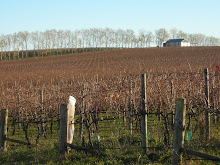
Some of the villas around seemed lovely, complete with swimming pool for those who didn't want to enjoy their coastal location. I leave you with a picture of one of the few cliff top vineyards we saw; you can decide how and for who they produce their wine. I have a suspicion that it's all part and parcel of the villa in Tuscany requirements.

Thursday, August 7, 2008

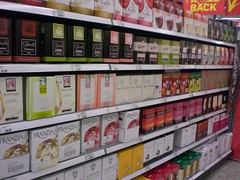
Cask wine - in Italy?!


Apparently there is a move in Italy to start making, or bottling, high quality wine in boxes. You might be surprised when you think about the land of chianti and barolo, and I can’t see it ever really taking off; you don’t even see screw cap wine in Italy at the moment.

A couple of things to note however: obviously the first being that just because wine comes in a bottle, does not mean it’s high quality. Italy is a big table wine consumer, and has a history of drinking wine exclusively with meals. Could this just be a more convenient packaging...?

Italians are not snobs about wine, and unless you go to more up market restaurants, anyone asking for the wine list is likely to get a bottle dusted off from the cellar. Most of the time you have caraffe wine, which often comes out of barrel – it’s like wine on tap. And you can get it in nifty quarter, half litre or litre glass jugs.

In the supermarkets in Italy (sensible people who haven’t confined alcohol purchases to complicated and expensive licensing laws), you can get huge four litre bottles of wine, which I have always imagined are more for cooking but then I wouldn’t know – I’d never get through one quickly enough anyway.

Some families I know even make a special trip to a producer at the beginning of the year to buy what they call a damigiana – it’s this enormous bottle (the biggest size is 54 litres) which you take home with a special filtering system whereby you can siphon the wine off into bottles. The idea behind it is a year’s worth of table wine drinking.

So who knows? Maybe the humble cask is about to enter its heyday in the old world.

Sunday, August 3, 2008

En primeur 2007: the chase


I think I may have finally decided I’m in the wrong business based solely on the en primeur acquisition we’ve undertaken in the last few months. To explain: we are traders in the fine wine industry and we advise a wine investment fund on its acquisition.

Our consultancy with the wine fund is recent and with the new found cash we have joined the en primeur race and have stocked up on a number of cases, including Lafite Rothschild, Leoville Las Cases, Yquem, and I’m pretty sure we’ve got some others floating around like Haut Brion and Lafleur.

Great for the investment fund, I imagine, despite the 2007 vintage being dubbed a difficult one. So far my boss has been pretty shrewd about his purchases, and these en primeur we only ever buy at convenient prices.

Call me a hopeless romantic, say I don’t what I’m talking about in terms of the wine industry, but I find it disappointing these wines are destined for investment. That is to say we have purchased cases of wine that will never be drunk.

I think en primeur purchases have their place in the industry if you want to secure your wine prior to commercial release, but I wonder who really drinks the above mentioned wines anymore. And does it bother the wine makers that their efforts go into wine that will never be consumed? Doubtful, given the money they're making.

I think there is a need to separate these two sub-industries within the wine sector itself: fine wine for investment and wine that people actually drink. I find it ironic that qualifications for my job included a knowledge of and passion for, wine. So far I’ve barely touched a bottle, and I certainly haven’t had a whiff of these wines, let alone ripped the cork out of one.

For me passion for wine is about challenging your senses, sharing your drinking, advising others on what you found worthwhile, seeking out new things to try, and exploring the efforts of producers who are interested in consumers experiencing their wine to the fullest.

But in our business we’re about growing the value of the portfolio, and our Lafite Rothschild 2007 is rushing off to wine storage in Geneva. So we’re achieving on the basis of our job, but when the fund suggests that investing in what you’re passionate about means you will have greater returns, it’s a marketing gimmick really. People who invest do it to make money, while people who are passionate about wine, drink it.

Image | The Wine Doctor

Tuesday, July 29, 2008

Australian wine a winner in Italy (at least in my house)

Well they say the way to a man’s heart is through his stomach, but I’m wondering if a flash bottle of wine isn’t better. My boyfriend was very impressed with the "gluggability" of our Penfold’s Koonunga Hill shiraz cabernet and had himself a second and third (!) glass.

I am proud to say the Heineken was put back in the fridge. And I thoroughly enjoyed that teeth staining, full Aussie red for a change. Probably not something I would always drink as I think my taste, like many I think, is changing slightly and I now enjoy an elegant wine, particularly in the heat we’re having in Italy in the moment.

Buying this bottle in Italy though, I was also able to appreciate the 2001 vintage. I find when I’m here mostly I can only get hold of recent vintages, if not the latest, and this is not always a good thing when we’re talking nebbiolo. One bad Australian habit is, in my opinion, drinking our wines too young. Maybe it’s just a lack of patience when ripping the cork out of a bottle. But the patient will be rewarded!

Anyway, here’s to Koonunga Hill and taking over the world. I only need to find the funds to support my now more expensive habit.

Saturday, July 26, 2008

Australian Wine in Italy: buying wine in Milan

Well, I’ve updated my profile to get to where my life’s at and I hope this will become a more regular, disciplined thing on my part. Anyway, Italy has gotten less beautiful and more of a struggle, the honeymoon is definitely over.

Anyway, I’ve found myself in Milan for work and while the trip is a bit of a pain in the arse (what with suicides, strikes, break downs and just generally late trains, the track record could do with some improving), I suppose I am enjoying the minimal time I get out on the streets, indulging in some city scape.

On the topic of missing Aussie wine, I finally got myself organised to go and buy some. Not far from where I work, but far enough that I nearly took a couple of wrong turns – thank God for Google maps really – I found an Enoteca that had a modest but selective offering.

For Aussies in Italy, finding Australian wine around these parts is not easy. People either know nothing about it, or totally scoff at it, and apart from that, demand is hardly worth it. So it’s a tough gig when, at the end of a hard day at work, you can’t put your feet up to a nice glass of shiraz.

Anyway, I got myself a bottle of Penfolds Koonunga Hill shiraz: a quaffer I presume, and one which I’ll test out on my boyfriend tomorrow when we try our new grill plate. He knows bugger all about wine so even if it’s crap, I’ll still look exotic.

And the other bottle I got, which is high in the intriguing stakes for me, is Charles Melton’s Nine Popes. I recently read about the GSM blend in Gourmet Wine Traveller (courtesy of Mum’s recent trip to Italy) and am keen to try it out.

From Enoteca Ronchi in Milan, the Koonunga Hill was particularly overpriced at 16 euros I thought, but the Nine Popes was 41 euros which works out around 65 AUD – not too bad considering the trip it’s taken to get here. Other Australian wines that Enoteca Ronchi has on offer include Moss Wood, Grosset (but not the riesling), Rosemount and Domaine A among others. My only doubts: the wines originate from a French importer...